
Talc Lumps for Grinding and Mineral Processing.
AHR coordinates talc lump supply for grinding mills, ceramic processors, filler producers, distributors and importers that require documented chemistry, controlled lump sizing, representative sampling, packing and export preparation.
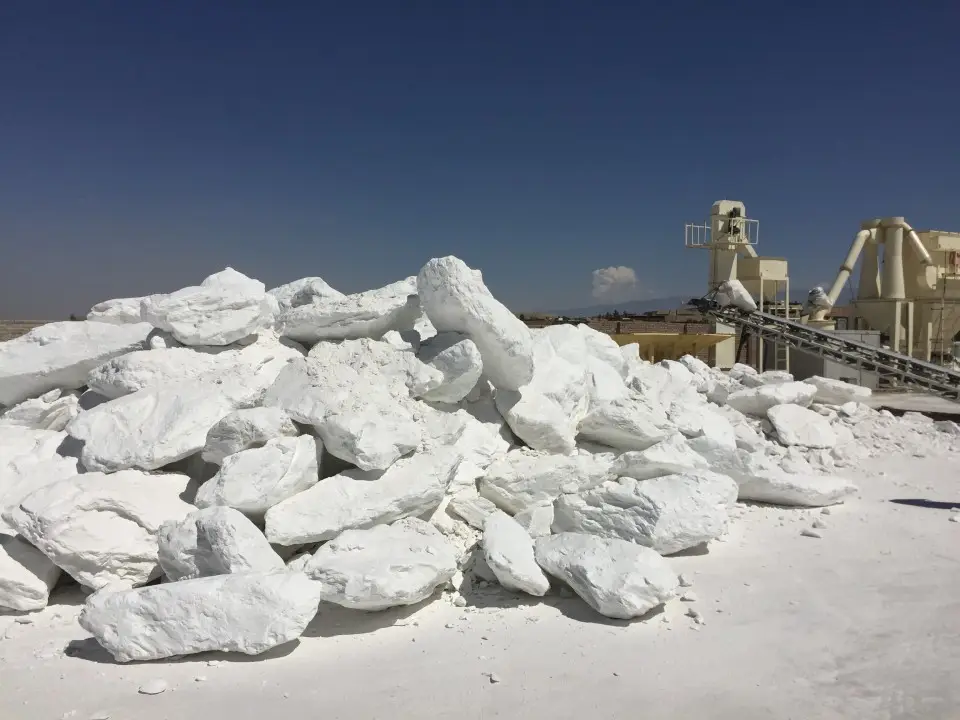
Talc lumps are feedstock, not finished powder.
The buyer normally processes the lumps through sorting, crushing, milling, classification or fabrication. The purchase specification should therefore reflect the downstream process and expected finished product.
Raw or semi-processed mineral form
Lumps can be supplied for further grinding, mineral processing, ceramic formulation or other approved industrial routes. Grade review should include chemistry, mineralogy, colour, size distribution, contamination control and expected processing behavior.
Review lump specificationsMilled and classified finished form
Powder grades require separate particle-size, colour, bulk-density, moisture, application and document controls. Buyers without their own grinding route should review the talc powder page instead.
View talc powderBuild a reviewable talc lump requirement.
The output identifies the commercial and technical fields needed before source comparison, sample approval and shipment discussion.
Requirement inputs
Unknown fields can remain blank. Add an approved sample or existing laboratory report when available.
Buy the lump grade for the required processing result.
A colour label or talc percentage alone is insufficient. The buyer should connect feedstock properties to sorting yield, milling behavior, finished-powder quality and process cost.
Mineral and chemical profile
01Review talc and associated minerals together with required oxide chemistry.
- SiO2 and MgO
- Fe2O3, CaO and Al2O3
- Carbonates and LOI
- XRD where required
Colour and sorting
02Define how white, off-white, grey, green or stained pieces are classified and accepted.
- Visual sorting rule
- Instrument value if needed
- Reference sample
- Lot tolerance
Lump size and fines
03Match the feed size to crushing equipment, handling and container-loading requirements.
- Minimum and maximum size
- Oversize allowance
- Fines or dust allowance
- Foreign material limit
Processing behavior
04Confirm grindability and yield through trials when the finished powder specification is critical.
- Sorting rejection
- Grinding performance
- Top-cut control
- Finished powder trial
AHR1 raw talc lump test report.
The visible values below come from the existing AHR1 Afghan Raw Talc Lumps Test Report. They are reference data and should not be presented as a current shipment COA.
Representative chemistry and physical data
The report identifies ED-XRF for the chemical parameters. Its note states that the values are based on an 800-mesh prepared sample and are subject to a stated tolerance of plus or minus 1%.
Use talc lumps as controlled mineral feedstock.
Most downstream applications require additional processing. The lump grade must be selected for the buyer’s mill, formulation, fabrication route or resale specification.
Grinding mills
Raw feed for crushing, grinding, classification and packaging into industrial talc powder grades.
Priority: chemistry, size, sorting yield, grindability and finished-powder trial.Ceramic processing
Feedstock for ceramic formulations where magnesium silicate chemistry and firing response are relevant.
Priority: mineralogy, oxide chemistry, LOI, colour and firing trial.Soapstone fabrication
Massive talc-rich rock may be reviewed for cutting, carving or technical fabrication when structure and block integrity are suitable.
Priority: dimensions, cracks, hardness, colour and fabrication sample.Trading and redistribution
Bulk or packed supply for buyers that resell, sort or process the material under their own market specifications.
Priority: source traceability, grading rule, inspection, weight and document consistency.Define the lump supply before requesting a price.
A complete inquiry reduces the risk of comparing unlike grades or receiving a quotation that cannot be approved by the processing plant.
| Parameter | Why it matters | What to request | Common buying error |
|---|---|---|---|
| Lump-size distribution | Affects crusher feed, manual handling, loading density and fines generation. | Minimum, maximum, oversize allowance, undersize or fines allowance and measurement method. | Requesting a nominal size without permitted variation. |
| Visual sorting grade | Controls colour variation, stained pieces and visible foreign material. | Written sorting rule, photographs, approved reference sample and lot tolerance. | Using terms such as super white without a test or reference. |
| Chemical composition | Supports process control and identifies major associated mineral indicators. | Required oxides, analytical method, units, limits and current lot result. | Treating oxide totals as a direct talc mineral percentage. |
| Mineralogy | Identifies talc and associated phases that may affect grinding, colour, abrasion or safety review. | XRD or another agreed method, reporting basis and detection limitations. | Assuming a white lump contains only talc. |
| Moisture and LOI | Influence freight efficiency, storage, processing and volatile-component interpretation. | Separate methods, sample basis, temperature, duration and acceptance limits. | Using moisture and LOI as interchangeable values. |
| Foreign material | Protects mills and finished-powder quality from soil, metal, wood, packaging debris or unrelated rock. | Prohibited-material list, visual inspection rule and rejection procedure. | Relying only on average chemistry. |
| Sampling and inspection | Determines whether the laboratory result represents the shipment. | Sampling location, increment plan, composite preparation, sealing and laboratory process. | Testing one hand-selected white piece. |
| Origin and traceability | Supports commercial, regulatory and responsible-sourcing review. | Source route, supplier identity, lot references, origin documents and requested declarations. | Accepting a broad origin statement without lot traceability. |
Move from source sample to shipment acceptance.
Representative testing and agreed inspection are more reliable than a single attractive sample or generic mine description.
Define the finished-product objective
State whether the lumps will become powder, ceramic feed, fabricated soapstone or redistributed mineral.
Approve a representative sample
Review colour, chemistry, mineralogy, size and processing performance using a documented sample identity.
Run a processing trial
When output quality is critical, crush and mill enough feed to assess yield, fineness, colour and rejects.
Agree the sampling protocol
Define where increments are taken, how the composite is prepared and which laboratory controls acceptance.
Inspect packing and loading
Check bag condition, contamination, gross weight, labels, container condition and photographic evidence.
Match the document set
Align the lot, COA, packing list, invoice, origin and transport documents before release.
Prepare dense mineral cargo for safe container movement.
Lump size, moisture, packing format and loading method affect payload, floor loading, securing, contamination control and discharge at destination.
FIBC jumbo bags
01Useful for segregated handling and countable units. Confirm rated capacity, gross weight, loops, liner and bag dimensions.
Loose bulk loading
02Can improve packing density but requires container protection, controlled loading and suitable discharge capability.
Payload control
03Use actual container data, bag weights, dunnage and route restrictions rather than a generic tonnage assumption.
Shipment documents
04Prepare the invoice, packing list, origin, transport, quality and buyer-specific documents required for release.
Talc lumps FAQ.
These answers clarify product form, quality review, processing and quotation requirements.
What are talc lumps?
Talc lumps are raw or semi-processed talc-rich mineral pieces supplied as feedstock for grinding, sorting, ceramic processing, fabrication or redistribution. They are not the same product as finished micronized talc powder.
What is the difference between talc lumps and soapstone?
Talc is a mineral. Soapstone is a talc-rich metamorphic rock that can contain other minerals. Commercial terminology varies, so buyers should use chemistry, mineralogy, physical structure and application requirements rather than names alone.
Which specifications are important for a grinding mill?
Confirm lump-size distribution, fines, visual sorting grade, chemistry, mineralogy, moisture, LOI, foreign material, grindability, sample identity and the expected finished-powder target.
Can talc lumps be used directly in cosmetics or pharmaceuticals?
No direct suitability should be assumed. Sensitive or regulated use requires controlled processing, a dedicated grade, appropriate asbestos and impurity testing, traceability, documentation and destination-market approval.
How should a shipment be sampled?
The parties should agree a representative increment and composite-sampling procedure that covers the shipment rather than selecting one visually attractive piece. The protocol should state sample handling, sealing, preparation and the controlling laboratory.
What information is needed for a talc lump quotation?
Send the processing route, grade or approved reference, lump size, colour target, chemistry and testing limits, quantity, packing, destination, Incoterm, sample requirement, inspection plan and document list.
Send the talc lump requirement.
Share the processing route, grade reference, lump size, chemistry, quantity, packing, destination, Incoterm, inspection and required documents.