
Overview
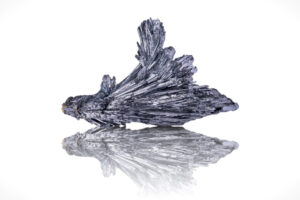
Antimony, often found in its mineral form known as stibnite (Sb2S3), is a valuable metalloid primarily used to produce antimony metal and antimony compounds. Recognized for its silver-gray appearance, high melting point, and brittleness, antimony is essential in various industries, including electronics, flame retardants, batteries, and alloys.
With its ability to enhance the properties of other metals, antimony serves as a critical component in applications requiring strength, durability, and safety. From lead-acid batteries to flame-retardant materials, the versatility and effectiveness of antimony make it an important material in modern manufacturing and safety solutions.
At Al Habtoor Resources we pride ourselves on top quality antimony ore, with a minimum SB content of 40% up to 70%. We are the top supplier of antimony in Dubai and the UAE.
Properties
– Antimony is a metalloid element with the symbol Sb.
– It has an atomic number of 51 and is located in group 15 of the periodic table.
– Antimony is a brittle, silvery-white metal that is not malleable or ductile.
– It has a melting point of 630.6 °C and a boiling point of 1587 °C.
– Antimony is a poor conductor of electricity and heat.
– It is commonly used in flame retardants, lead-acid batteries, and as an alloying agent.
Applications
Antimony’s unique properties make it a crucial material across several industries:
- Battery Manufacturing:
- Antimony is a key component in lead-acid batteries, specifically in the grid alloy of battery plates. Its inclusion enhances the battery’s performance by increasing cycling life and reducing self-discharge rates, making it essential for automotive and industrial batteries.
- Flame Retardants:
- Antimony trioxide (Sb2O3) is extensively used as a flame-retardant synergist, especially in combination with halogenated flame retardants. It is crucial in producing plastics, textiles, rubber, and electronics that need fire resistance for safety.
- Alloy Strengthening:
- Antimony is commonly alloyed with lead, tin, and other metals to increase their hardness, strength, and corrosion resistance. These antimony alloys are vital in producing ammunition, bearings, solder, and cable sheathing, where enhanced durability and reliability are crucial.
- Pigments:
- Antimony compounds are used to create pigments like Naples yellow (antimony lead yellow), widely utilized in paints, ceramics, and plastics for their vivid and stable color properties.
- Antimony Trioxide Production:
- Antimony ore is also processed into antimony trioxide (Sb2O3), a fine white powder used as a synergist in flame-retardant materials. This compound is integral in the manufacture of plastics, textiles, rubber, and electronics, enhancing their safety and fire resistance.
We do offer custom lead-antimony mixes, ingots, concentrates and more.